When an AI Agent Should Pause for Human Review

An AI agent can read a document, propose a decision and trigger the next step in a workflow. The important design question is who can stop that next step when the evidence is incomplete or the proposed action is wrong.
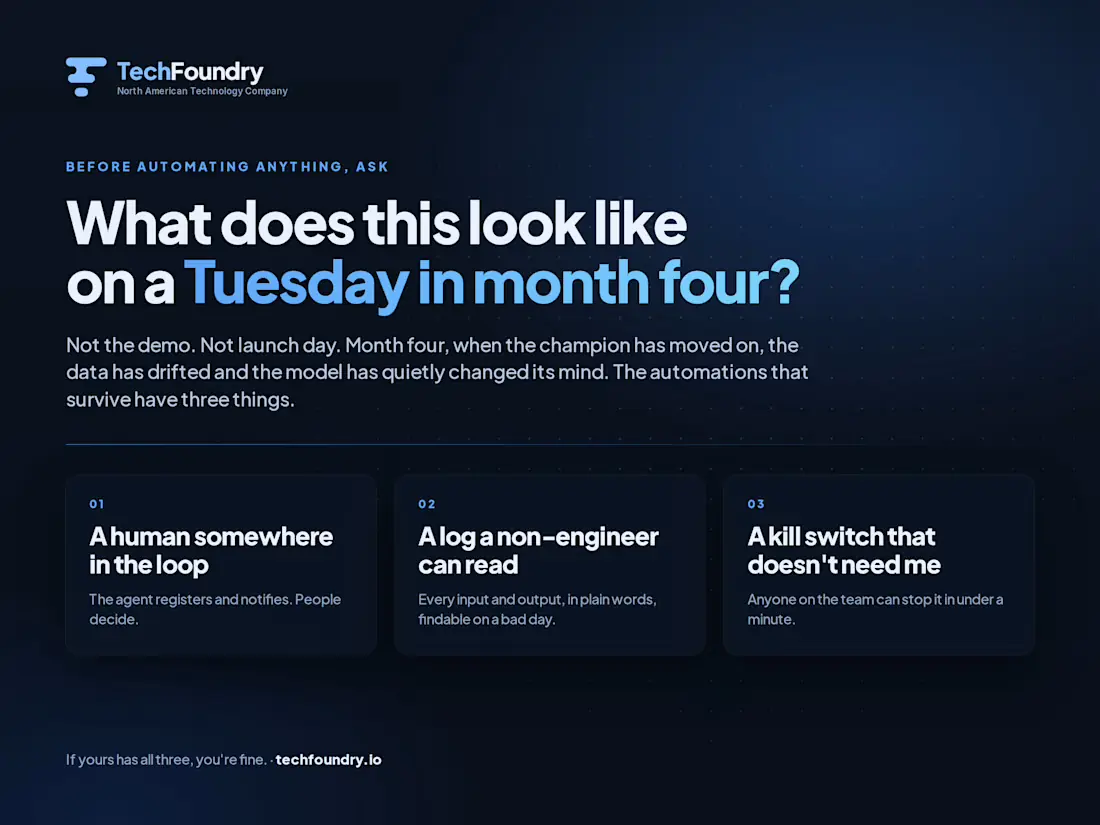
In a recent Contra post, TechFoundry founder Zahid Hussain described the value of giving people a clear way to reject an agent’s decision. That idea leads to a practical engineering principle: build the review process alongside the automation.
Separate a proposed action from permission to execute
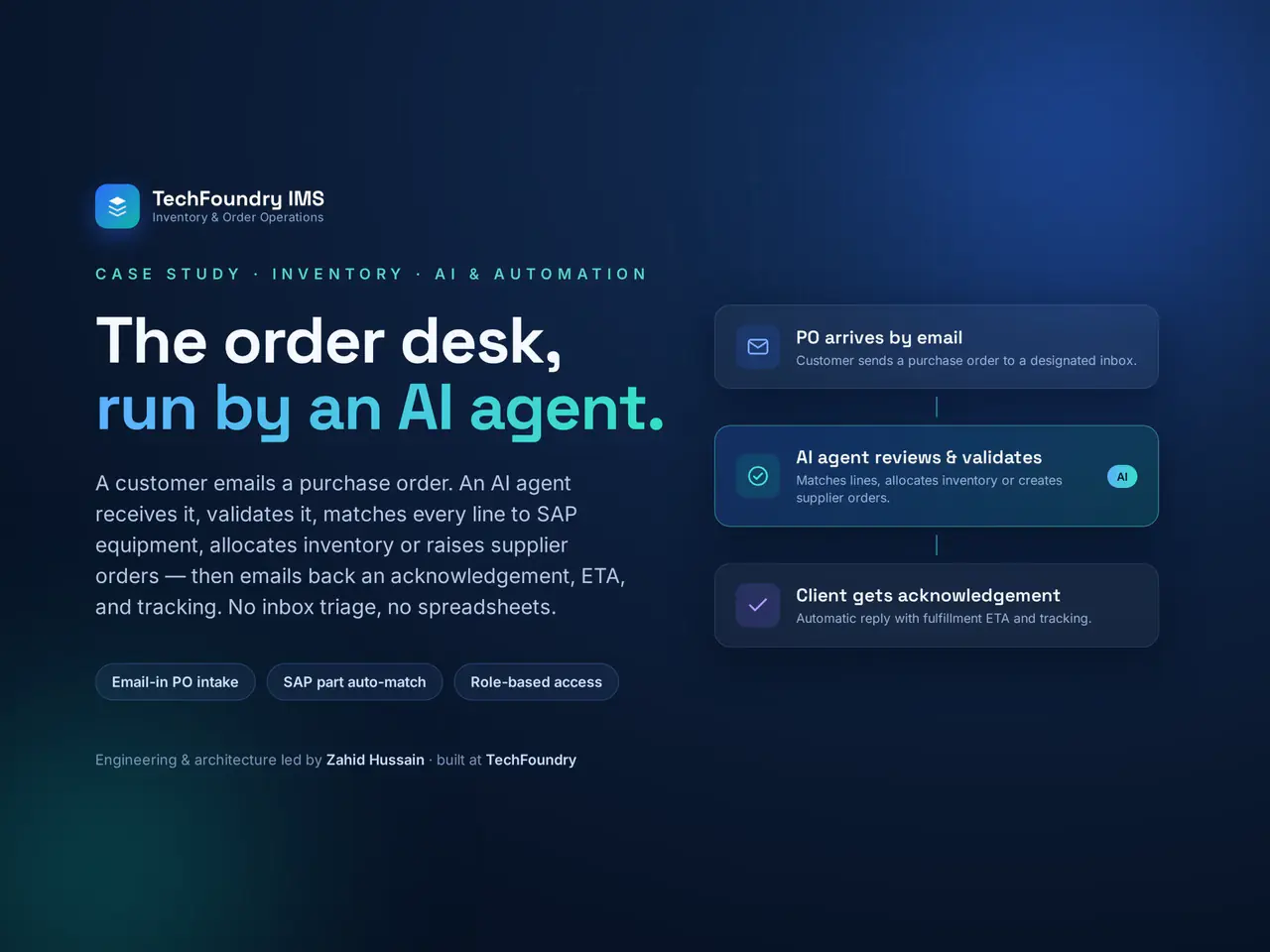
Consider an agent handling an incoming purchase order. It may extract the requested items and suggest how to fulfill them. Those are useful outputs, but they are not automatically permission to commit stock, contact a supplier or dispatch an order.
Define the boundary before connecting the agent to operational tools. Specify which actions it can complete, which require approval and which are outside its remit. A reviewer should be able to inspect a proposal while the consequential action remains on hold.
Give reviewers evidence they can use
A review screen should help someone make a decision without reconstructing the whole workflow. Put the proposed action beside the relevant source material, extracted fields and explanation of what needs attention.
- What is being proposed? Describe the action and the records it would change.
- What supports it? Show the source document and relevant business context.
- Why was it flagged? Identify the missing information, conflicting values or policy condition.
- What can the reviewer do? Offer clear choices to approve, correct, reject or escalate.
A confidence score can be one signal, but it should not stand in for evidence or a business rule. The reviewer needs to understand the actual uncertainty.
Choose where human review belongs
Sending every minor action to a person can create a queue that is harder to manage than the original work. Start by separating routine, reversible steps from decisions with meaningful consequences.
An internal classification may be suitable for automation within agreed rules. An ambiguous customer record or a commitment outside an approved limit may need review. These are workflow design choices, not universal thresholds that should be copied between businesses.
Define who owns each exception, what happens if nobody responds and whether execution should remain paused. A review queue needs an operating process as well as a screen.
Capture why a person changed the decision
Approvals show what passed review. Corrections reveal where the system’s interpretation differs from the operator’s judgement.
Record the original proposal, the final decision, the reviewer and the reason for the change. Repeated corrections can help the team identify unclear instructions, missing context or a rule that needs adjustment.
Saving an override does not automatically retrain a model or guarantee that the next decision will improve. Treat these records as inputs to deliberate evaluation. Test a proposed change against representative examples before expanding what the agent may do.
A reference example from TechFoundry
Our Agent Ops Console demonstrates a review queue, evidence beside a proposed action and recorded human overrides. It is a reference build using sample data, not a report of measured customer results. The cover illustration also represents a sample workflow.
The useful pattern is the connection between policy, review and a traceable outcome. A person can understand what the agent proposed and make an accountable decision about what happens next.
Start with one decision and a clear owner
Choose a recurring decision with accessible source information and an operator who can judge the result. Define the allowed actions, escalation conditions and evidence required for review. Then measure how often proposals need correction, how long exceptions wait and whether the workflow produces the intended outcome.
TechFoundry builds AI agents around the systems and responsibilities a business already has. If you have a workflow in mind, start a project with the decision you want to improve and the boundaries it must respect.
Put the idea to work
Have a workflow ready for AI or software?
Show us the process, the systems it touches and the decisions people need to keep. We will help define a useful first release.

Join the conversation
Comments are reviewed before they appear. Your email address will not be published.