5G Communications: How the Technology Works | TechFoundry
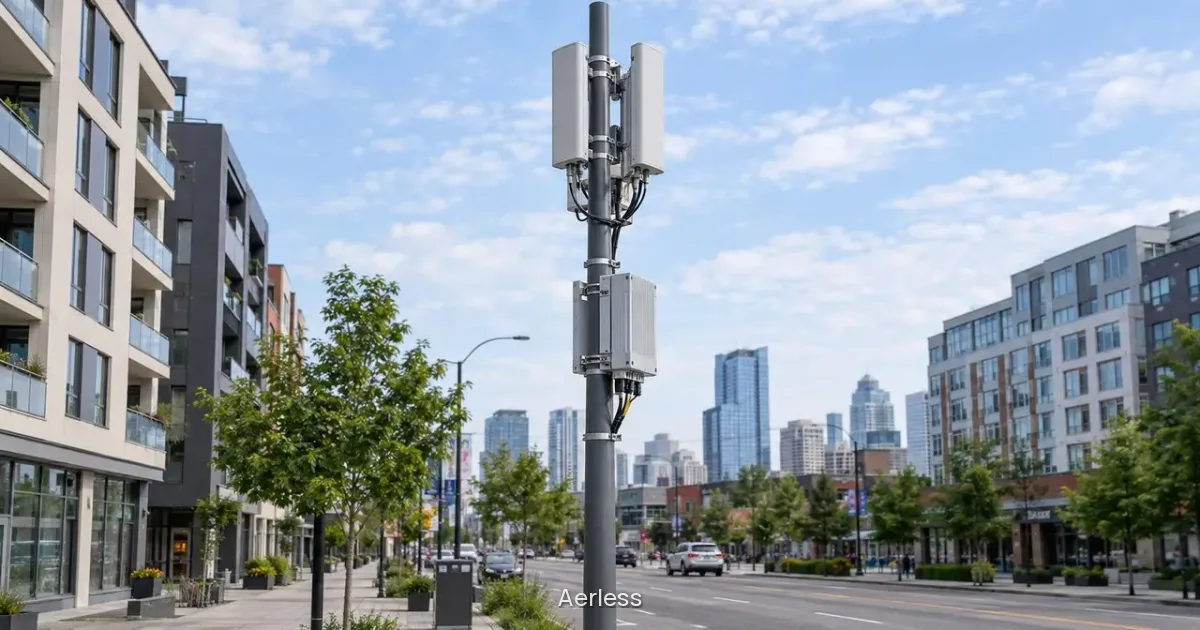
5G networks use higher radio frequencies and smaller cell sites than 4G, delivering faster speeds and lower latency. Each cell site connects to the core network over fiber, often at 25G, using protocols like CPRI and eCPRI to carry digitized radio signals. Performance depends on spectrum allocation, fiber reach, transport capacity and whether the operator deploys standalone 5G or anchors it to an existing 4G core.
What 5G communications means in practice
5G is the fifth generation of cellular network standards, defined by 3GPP and built on higher radio frequencies, denser cell sites and packet-switched architecture. Unlike 4G, which relies on larger macro cells, 5G divides coverage into many smaller cells to deliver higher capacity and lower latency. The technology supports three main use cases: enhanced mobile broadband, ultra-reliable low-latency communication for industrial automation and autonomous vehicles, and massive machine-type communication for IoT sensors.
The shift to 5G requires more than new radios. Operators must deploy fiber to every cell site, upgrade transport networks to 25G or 100G speeds, and often rebuild the core network to support packet-based routing and network slicing.
How a 5G network is structured
A 5G network has three main layers. The radio access network (RAN) includes the cell sites with radios, antennas and baseband processing units that communicate with mobile devices. The transport network carries traffic between the RAN and the core, using fiber links and optical modules to move data at 10G, 25G, 100G or higher speeds. The core network routes data packets, manages user sessions, handles authentication and connects to the internet and other networks.
In many 5G deployments, the baseband processing is centralized in a data center or hub site rather than installed at every cell tower. This architecture, called centralized RAN (C-RAN) or cloud RAN, reduces equipment costs and simplifies maintenance, but it requires high-capacity, low-latency fiber links between the remote radio heads at the cell site and the centralized baseband units. Those links are called fronthaul, and they typically run at 25G per radio sector.
Spectrum bands and their trade-offs
5G networks use three broad categories of radio spectrum, each with different performance characteristics. Low-band spectrum (below 1 GHz) covers wide areas and penetrates buildings well, but it offers modest speed improvements over 4G. Mid-band spectrum (1 to 6 GHz) balances coverage and capacity. Millimeter wave spectrum (24 GHz and above) delivers gigabit speeds but only over short distances and struggles to penetrate walls or foliage.
Most commercial 5G deployments today use mid-band spectrum, particularly the 3.5 GHz C-band in the United States. Millimeter wave is used in dense urban areas, stadiums and indoor venues where very high capacity is needed over short distances. Low-band provides baseline coverage in rural areas and fills gaps in mid-band networks.
The choice of spectrum affects every other part of the network. Millimeter wave requires many more cell sites, each with fiber backhaul. Mid-band allows larger cells but still needs denser deployment than 4G.
Fronthaul: connecting the radio to the baseband
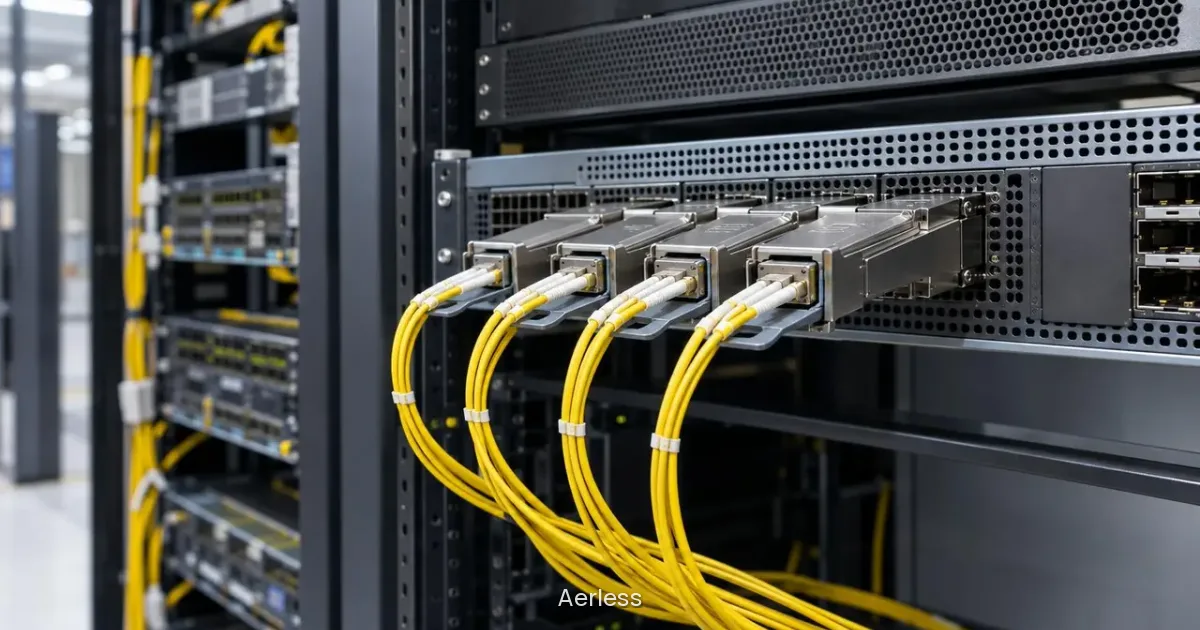
Fronthaul is the fiber link that carries digitized radio signals between the remote radio head at the cell site and the baseband processing unit, which may be located in a nearby hub site or data center. The radio converts the analog RF signal from the antenna into digital in-phase and quadrature (I/Q) samples, which are then sent over fiber using a protocol like CPRI or eCPRI.
A single 100 MHz 5G carrier using CPRI option 10 requires 24.33 Gb/s of fronthaul bandwidth per sector, which fits on a 25G fiber link. Wider carriers or multiple sectors require proportionally more bandwidth. The fronthaul link must meet strict latency requirements, typically a few hundred microseconds round-trip, to keep the radio and baseband synchronized.
Fronthaul is usually point-to-point fiber, though some deployments use passive optical splitters or wavelength-division multiplexing to share fiber strands. The optical modules must support the required data rate and distance, and they must be coded to work with the specific switch or router at each end. Aerless supplies SFP28-25G-eSR-IT multimode modules for short fronthaul runs (up to 300 m on OM4 fiber) and SFP28-25G-LR-IT single-mode modules for longer distances (10 km), both rated for industrial temperature and supporting CPRI option 10 and eCPRI.
CPRI vs eCPRI and why the shift matters
CPRI (Common Public Radio Interface) is the original fronthaul protocol, developed for 3G and 4G networks. It sends uncompressed I/Q samples at fixed bit rates determined by the carrier bandwidth and antenna configuration. A 100 MHz carrier with 4×4 MIMO requires 24.33 Gb/s using CPRI option 10, regardless of how much actual user data is being transmitted. This makes CPRI simple and deterministic, but it wastes bandwidth when the radio is lightly loaded and requires dedicated point-to-point fiber.
eCPRI (enhanced CPRI) compresses and packetizes the radio data, allowing the fronthaul traffic to share a standard Ethernet network with other data. Instead of sending raw I/Q samples, eCPRI moves some of the baseband processing to the cell site and sends only the frequency-domain data or partially processed symbols. This reduces the data rate and relaxes the latency requirement slightly, making it possible to use Ethernet switches in the transport path and to route fronthaul traffic over longer distances.
The shift to eCPRI is driven by cost and flexibility. Operators can use standard 25G Ethernet switches instead of dedicated CPRI transport equipment, and they can share fiber infrastructure between fronthaul, backhaul and other services. The trade-off is increased complexity in the radio unit, which must now perform some baseband functions, and the need for careful network design to ensure that latency and jitter remain within spec.
Backhaul: connecting cell sites to the core
Backhaul is the network that aggregates traffic from multiple cell sites and carries it to the mobile core. Unlike fronthaul, which carries raw radio samples, backhaul carries user data packets after they have been processed by the baseband unit. A single 5G cell site might generate 1 to 10 Gb/s of backhaul traffic depending on the number of users, the spectrum bandwidth and the applications in use.
Most 5G backhaul uses fiber, with 10G or 25G links for individual cell sites and 100G or higher speeds for aggregation points. In areas where fiber is not available, operators use microwave or millimeter-wave point-to-point links, though these introduce latency and limit capacity. Backhaul networks are typically built as Ethernet or IP/MPLS networks, with routers or switches at aggregation points and the mobile core.
The backhaul network must be designed for the peak traffic load, not the average, because mobile traffic is highly variable and concentrated during busy hours. It must also support quality-of-service policies to prioritize latency-sensitive traffic like voice calls and real-time video over bulk downloads.
Fiber types and reach in 5G transport
5G transport networks use two main types of optical fiber. Single-mode fiber (SMF) has a small core (9 microns) that supports only one light path, allowing signals to travel long distances with minimal dispersion. A 25G LR module on single-mode fiber can reach 10 km, and 100G modules can reach 40 km or more with the right optics. Single-mode fiber is used for backhaul, long fronthaul runs and connections between data centers.
Multimode fiber (MMF) has a larger core (50 or 62.5 microns) that supports multiple light paths, which limits distance but reduces cost for short runs. OM3 multimode fiber supports 25G transmission up to 200 m, and OM4 extends that to 300 m using an eSR (extended short reach) module. Multimode is used within buildings, between co-located equipment racks and for short fronthaul links where the baseband unit is on the same site as the radio.
The choice between single-mode and multimode depends on the distance and the existing fiber infrastructure.
Standalone (SA) vs non-standalone (NSA) 5G
Non-standalone (NSA) 5G anchors the 5G radio to an existing 4G core network. The mobile device connects to both 4G and 5G radios simultaneously, using 4G for control signaling and 5G for high-speed data. NSA is faster to deploy because it reuses the 4G core, but it limits the performance and feature set of 5G. Advanced features like network slicing and ultra-reliable low-latency communication are not available.
Standalone (SA) 5G uses a native 5G core network based on a service-based architecture with cloud-native software functions. The mobile device connects only to the 5G radio, and all signaling and data pass through the 5G core. SA enables network slicing, which allows operators to create virtual networks with different performance characteristics for different applications. SA also supports features like edge computing integration, precise positioning and improved security.
Most operators launched 5G using NSA and are now migrating to SA as they upgrade their core networks. The migration requires new software, changes to the RAN configuration and sometimes new spectrum allocations, but it unlocks the full performance and flexibility of 5G.
Edge computing and distributed architecture
Mobile edge computing (MEC) places compute and storage resources close to the cell site, reducing the round-trip time between the mobile device and the application server. Instead of sending every request to a centralized data center hundreds of kilometers away, the application runs on a server at the cell site or in a nearby hub.
Edge computing is critical for applications that require real-time response, such as autonomous vehicles, industrial automation, augmented reality and remote surgery. It also reduces backhaul bandwidth by processing data locally and sending only the results to the core network. For example, a factory robot might send video to an edge server for real-time object recognition, with only the control commands sent back, rather than streaming the entire video feed to a distant data center.
Deploying edge computing requires coordination between the mobile operator, the application provider and the infrastructure owner. The edge server must be connected to the RAN with low-latency fiber, and the 5G core must support user-plane function placement at the edge to route traffic locally.
What network operators need to deploy 5G
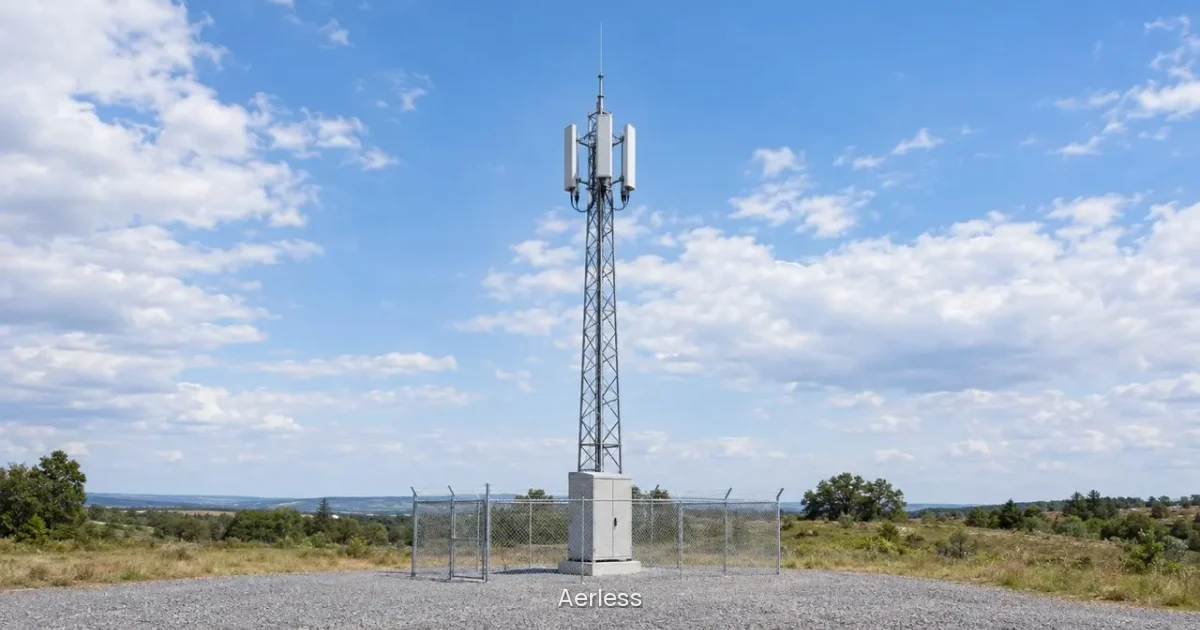
Deploying a 5G network requires spectrum licenses, which are typically auctioned by national regulators. Operators need dense fiber infrastructure to connect every cell site, with 25G or 100G transport capacity depending on the number of sectors and the spectrum bandwidth. Each cell site requires radios, antennas, baseband units (or connections to centralized baseband), power systems and often new tower or rooftop leases.
The core network must be upgraded to support 5G signaling and user-plane functions, either by adding 5G software to an existing 4G core (for NSA) or by deploying a new cloud-native 5G core (for SA). Operators also need network management and orchestration systems to configure and monitor thousands of cell sites, and they often partner with tower companies, fiber providers and equipment vendors to share infrastructure costs.
Industrial and outdoor requirements
Many 5G cell sites are located in outdoor cabinets, on rooftops or in remote areas where equipment is exposed to temperature extremes, humidity, dust and vibration. Standard commercial networking equipment is rated for 0°C to 40°C or 0°C to 50°C, which is not sufficient for outdoor deployment. Industrial-temperature equipment is rated for -40°C to +85°C, ensuring reliable operation in winter cold and summer heat.
Optical modules are particularly sensitive to temperature because the laser wavelength and output power shift with temperature, and the receiver sensitivity degrades at high temperatures. Aerless 25G SFP28 modules, both the SFP28-25G-eSR-IT multimode and SFP28-25G-LR-IT single-mode versions, are rated for -40°C to +85°C and support CPRI option 10, eCPRI and 25G Ethernet. They are manufactured in Taiwan, coded for the buyer’s switch and backed by a two-year warranty.
Other equipment that must meet industrial temperature requirements includes Ethernet switches, routers, power supplies and battery backup systems. For more on SFP module types and temperature ratings, see Industrial vs Commercial Temperature SFPs: A Buying Guide.
FAQ
What does 5G communications mean?
5G communications refers to the fifth generation of cellular network technology, standardized by 3GPP, which uses higher radio frequencies, smaller cell sites and packet-based transport to deliver faster speeds, lower latency and higher capacity than 4G. The architecture separates radio functions from baseband processing and connects them over fiber fronthaul links, allowing operators to centralize equipment and reduce costs while improving performance.
What is the difference between CPRI and eCPRI in 5G?
CPRI carries uncompressed digitized radio samples at fixed rates like 24.33 Gb/s for a 100 MHz carrier, requiring dedicated point-to-point fiber between the radio and baseband. eCPRI compresses and packetizes the data by moving some baseband processing to the cell site, allowing standard Ethernet switches in the transport network. The shift to eCPRI lowers transport costs and increases flexibility, but it requires more capable radio units and careful network design to maintain low latency.
Why does 5G require so much fiber?
5G cell sites are smaller and more numerous than 4G, and each site needs a fiber connection to carry fronthaul (radio-to-baseband) and backhaul (site-to-core) traffic at 10G, 25G or higher speeds. The higher frequencies and wider channels used by 5G generate more data per site, often several gigabits per second, and the low-latency promise requires fiber rather than microwave or copper backhaul. Centralized RAN architectures also require fiber fronthaul to connect remote radio heads to baseband units that may be kilometers away.
What optical modules are used in 5G fronthaul and backhaul?
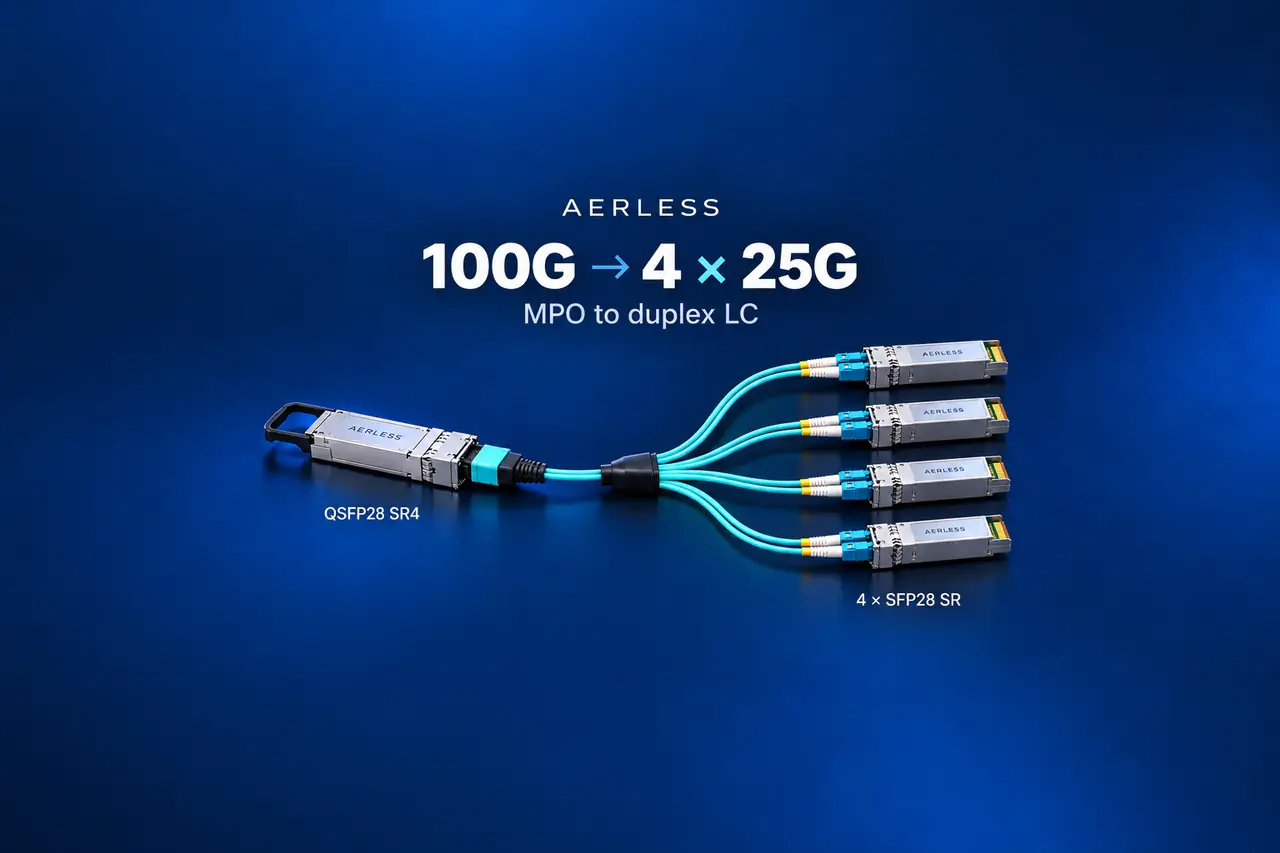
Fronthaul typically uses 25G SFP28 modules supporting CPRI option 10 (24.33 Gb/s) or eCPRI, with multimode eSR modules for short runs (up to 300 m on OM4) and single-mode LR modules for longer distances (10 km). Backhaul aggregation uses 100G QSFP28 or higher-speed modules, depending on the number of cell sites served. Aerless supplies SFP28-25G-eSR-IT (multimode, 850 nm VCSEL, 300 m on OM4) and SFP28-25G-LR-IT (single-mode, 1310 nm DFB, 10 km) modules that support 25G Ethernet, CPRI option 10 and eCPRI, rated for industrial temperature and coded for the buyer’s switch.
What is standalone 5G and why does it matter?
Standalone (SA) 5G uses a native 5G core network with cloud-native software functions, enabling features like network slicing, ultra-reliable low-latency communication and full control-plane separation. Non-standalone (NSA) 5G anchors the radio to a 4G core, which is faster to deploy but limits advanced features. SA allows operators to create virtual networks with different performance characteristics for different applications, which is essential for industrial automation, autonomous vehicles and other real-time use cases.
Do 5G networks require industrial-temperature equipment?
Yes, for outdoor cell sites and remote locations where equipment is mounted in cabinets exposed to weather extremes. Optical modules, switches and other active equipment must be rated for -40°C to +85°C to ensure reliable operation in winter cold and summer heat. Standard commercial equipment rated for 0°C to 40°C will fail or perform unpredictably outside that range. Aerless 25G SFP28 and QSFP28-100G-SR4-IT modules meet the industrial temperature requirement and are supplied to customers across the United States and Canada with a two-year warranty.
Plan the infrastructure
Working through a network requirement?
Send the application, environment, quantities and any known part numbers. The Aerless team will help translate them into a practical equipment quote.
Join the conversation
Comments are reviewed before they appear. Your email address will not be published.