5G for Business: What Network Performance Really Depends On

5G is a system, not a single speed
5G can support higher capacity, lower latency and more flexible network services than earlier mobile generations. The experience a business receives still depends on spectrum, radio design, backhaul, device capability, traffic, distance and the application itself.
That distinction matters when planning connected operations. A headline peak rate is a standard target under ideal conditions. It is not a promise for every user, building or deployment.
Read performance figures in context
The International Telecommunication Union lists IMT 2020 performance targets that include a 20 Gbit/s downlink peak rate, 10 Gbit/s uplink peak rate, 4 ms radio latency for enhanced mobile broadband and 1 ms for ultra reliable low latency communications. The ITU explanation of IMT 2020 requirements makes clear that these are technical performance parameters, not typical end user results.
For a real project, define what the application needs:
- Expected throughput in each direction
- Maximum tolerable latency and variation
- Availability and recovery requirements
- Number and density of connected devices
- Indoor, outdoor, fixed or mobile operating conditions
- Security, segmentation and management requirements
Spectrum shapes the coverage and capacity tradeoff
Lower frequencies generally travel farther and penetrate buildings more effectively. Higher frequencies can support more capacity but usually cover shorter distances and are more sensitive to obstruction. Mid band deployments often balance coverage and capacity, but the result still depends on local design and licensed spectrum.
Do not infer indoor performance from an outdoor coverage claim. In the United States, the FCC National Broadband Map guidance explains that the mobile map represents reported outdoor or in vehicle coverage and does not show indoor coverage. A site survey and application test remain necessary for a facility.
Fiber and transport determine what the radio can deliver
A radio site needs reliable transport to the rest of the network. Fiber fronthaul, midhaul and backhaul links carry traffic between radios, distributed or centralized processing and the core. Their capacity, optical budget, redundancy and timing design influence the service available at the edge.
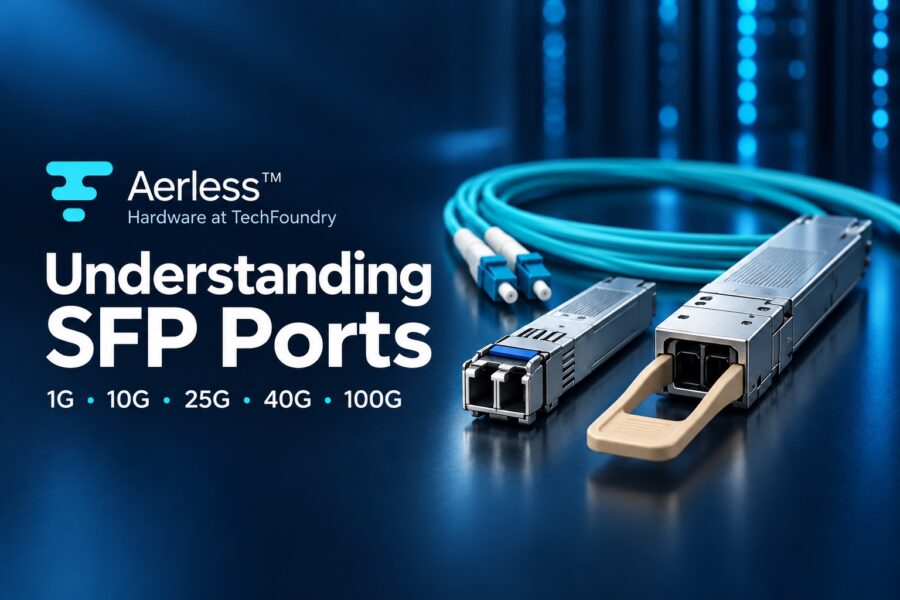
This is where transceivers and cabling become part of the 5G performance story. Form factor, data rate, reach, wavelength, connector, fiber type and temperature range must match the equipment and environment. An outdoor or industrial site may require a different temperature rating and operating margin from a controlled data center.
Latency includes the complete route
Radio latency is only one part of an application response. Transport, routing, the mobile core, cloud region, application processing and device behavior all add time. Edge computing can reduce part of that route for the right workload, but it does not remove the need to measure end to end behavior.
For automation, video analytics or remote control, test the full path under expected load. Measure latency distribution and packet loss, not only the best result.
Private networks and network slicing serve different needs
A private 5G network can give an organization more control over coverage, devices, policy and local traffic. A public network integrated private model may provide a different balance of control and reach. Network slicing can create logically separated service behavior on shared infrastructure where the operator and network support it.
3GPP describes continued work on private networks and network slicing across recent releases. These capabilities are design options. The right choice depends on applications, spectrum access, operational skills, security and commercial arrangements.
Plan from the application back to the equipment
- Document the application, locations, devices and traffic pattern.
- Define measurable service requirements and failure behavior.
- Assess spectrum and radio coverage for the actual environment.
- Design transport capacity, optical reach, redundancy and timing.
- Select compatible transceivers, fiber assemblies and site components.
- Test end to end under realistic load and operating conditions.
- Monitor capacity, errors, latency and environmental conditions after launch.
Build a requirement that suppliers can answer
A useful equipment request includes host platform, form factor, data rate, wavelength or reach, fiber and connector type, temperature range, quantity and delivery location. If those details are not settled, provide the application and site constraints so they can be worked through before part selection.
Aerless by TechFoundry supports optical transceivers, MPO and MTP fiber connectivity and related telecom infrastructure for data center, wireless and network deployments across North America.
Plan the infrastructure
Working through a network requirement?
Send the application, environment, quantities and any known part numbers. The Aerless team will help translate them into a practical equipment quote.

Join the conversation
Comments are reviewed before they appear. Your email address will not be published.