Ideas built into working products
From an idea to something that actually runs.
Delivered is not the same as running.
You know what it should do. We take it from a clear idea to a product in production, and keep it working as it grows. Web applications, operational platforms and mobile products, built to be run rather than handed over.
Discuss your project ↗Product Development
- 01Shape the idea
- 02Ship a first release
- 03Run it and extend
The starting point
Most ideas stall between the demo and production.
Getting something to work once is the easy half. What decides whether a product survives is everything after that: the permissions, the records that have to reconcile, the exceptions nobody thought about, and the handover that lets someone else keep it alive.
Applications and platforms
Multi tenant products, internal platforms and customer facing applications, built on the rules the business actually runs on rather than a generic template.
Mobile products
iPhone and cross platform apps taken through store review and released, not left at the prototype stage.
The unglamorous parts
Permissions, audit trails, reporting and reconciliation that has to agree with itself. This is usually what decides whether a product survives contact with real use.
Taking over an existing build
Assess what already exists, find the constraints and plan a staged rebuild or extension instead of an unnecessary rewrite.
Before you get in touch
Is this the right
piece of work?
We would rather tell you it is not than take a project that was never going to land well.
This fits when
- You can describe the outcome you want, even if you cannot yet describe the screens.
- It has to work in the real world, with permissions, records and numbers that must reconcile.
- You want something that runs and keeps running, not a prototype for a pitch.
Probably not when
- The idea is still changing shape every week and nobody can say what the first release must do.
- What is actually needed is a demo for a funding conversation, with no intention of operating it.
What we need from you
- Someone who can decide on scope and sign off each phase.
- Access to the people who will use it, once there is something worth trying.
- A clear view of the outcome. Turning that into a specification is our job, not yours.
What that looked like
Inventory Management System
An idea for taking purchase orders out of an inbox. It now runs as a multi tenant platform where customers, suppliers, carriers and staff each work inside their own role, and every order is validated, allocated, tracked and reconciled.
Read the case study ↗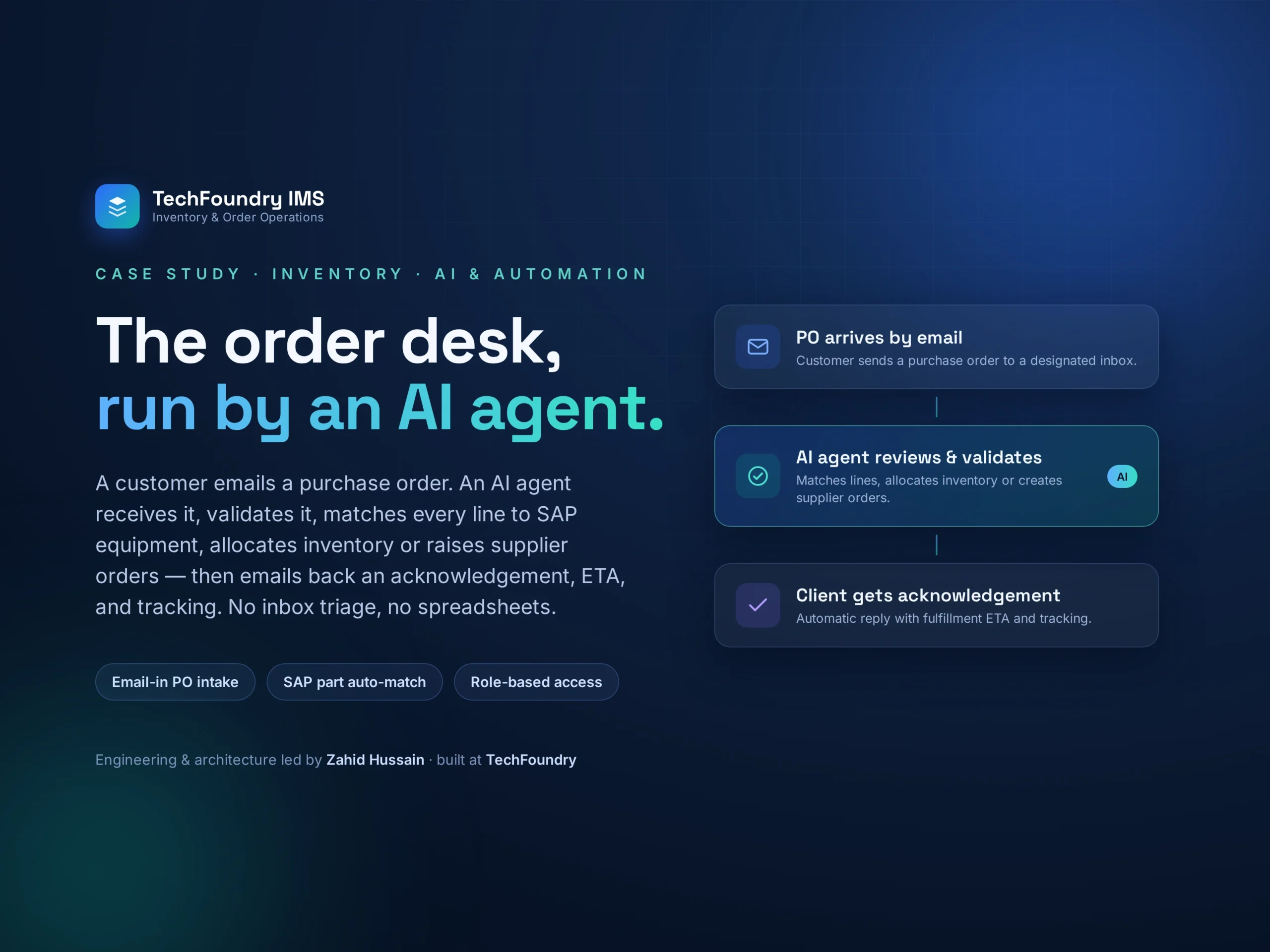
A workflow to picture
An idea for a shared workspace becomes a first release a real team uses, then grows around what they learn from using it rather than what was guessed before it existed.
See a related example ↗Before we begin
Useful questions.
Clear answers.
I have an idea but not a specification. Is that a problem?
No. The first phase turns the idea into a scope with user journeys and clear boundaries, which you review before any development starts. What we need from you is clarity on the outcome, not a document.
Who owns the code and documentation?
Ownership, access and handover are agreed in the project scope before development begins. We make these responsibilities explicit.
What happens after launch?
We agree maintenance responsibilities, monitoring needs and support arrangements as part of delivery. Any response commitments are defined in the engagement.
How to engage with us
Good work starts
with a conversation.
Tell us what you want to build or improve, and we will come back with a practical next step rather than a sales sequence.
Teams we have worked with
Read client feedback ↗