A connected foundation for your business
One business. Too many disconnected records.
One version of the truth, and systems that agree on it.
Connect applications, operational data and cloud services so information moves with the work. Define a reliable contract between systems before adding more automation on top.
Discuss your project ↗System Integration
- 01Define the source of truth
- 02Connect the interfaces
- 03Reconcile and monitor
The starting point
Integration fails when nobody decides what is authoritative.
Teams need consistent information, even when the underlying tools serve different purposes. Integration starts by agreeing which system owns each record and how changes should move between them.
Business application integration
Connect operational platforms with ERP, CRM and accounting systems through supported APIs and agreed data mappings.
API and service development
Design interfaces for new applications, partners and internal tools with clear input validation and access controls.
Data synchronization
Define source records, matching rules and conflict handling for information that needs to stay consistent.
Cloud and migration planning
Assess dependencies, move services in manageable stages and verify the behavior of the connected environment.
Before you get in touch
Is this the right
piece of work?
We would rather tell you it is not than take a project that was never going to land well.
This fits when
- The same fact lives in more than one system and the copies disagree.
- You can name which system should win when they do.
- The systems involved have interfaces, or can be given them.
Probably not when
- Nobody is willing to decide which system is the source of truth.
- The real problem is the process rather than the plumbing, which is a different service.
What we need from you
- Access and credentials for the systems, arranged before the work starts.
- Someone who can settle the source of truth question when it comes up, and it will.
- A view on what has to reconcile and how often.
What that looked like
OneHub
Built on one rule: a number is calculated once and reused. Payroll takes its brackets from the fiscal year schedule, every finalised run feeds the same reporting layer, and a Microsoft 365 sync sits alongside. The dashboard, the payslip and the tax certificate cannot disagree, because there is only one of each number.
Read the case study ↗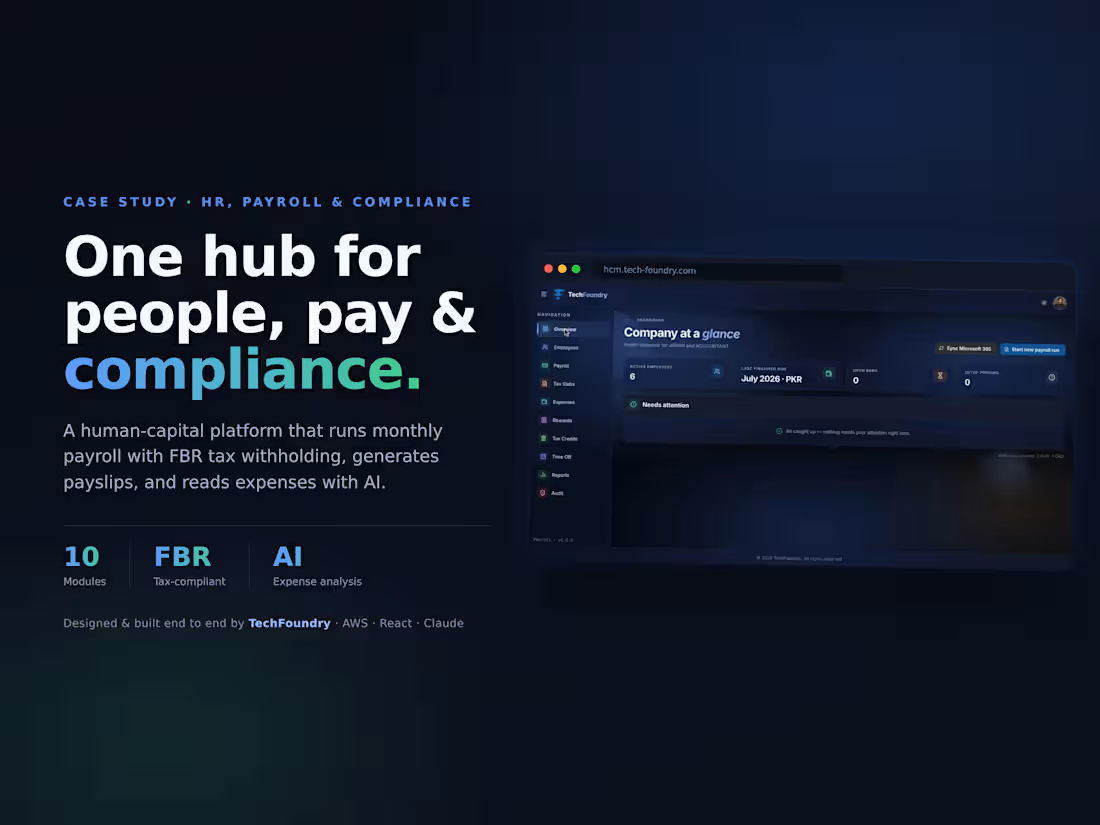
A workflow to picture
An order application can share approved financial data with accounting while keeping fulfillment status with the operational system that owns it.
See a related example ↗Before we begin
Useful questions.
Clear answers.
Can you connect a system without a modern API?
We first assess supported export, import and integration options. Access limitations and maintenance tradeoffs are identified before committing to an approach.
Which platforms do you work around?
Our current site highlights QuickBooks, AWS, Google Cloud and Microsoft. The exact integration depends on your products, access, APIs and requirements.
How do you avoid duplicate or conflicting records?
We define record identifiers, ownership, duplicate handling and reconciliation rules, then test failure and retry scenarios alongside the normal workflow.
How to engage with us
Good work starts
with a conversation.
Tell us what you want to build or improve, and we will come back with a practical next step rather than a sales sequence.
Teams we have worked with
Read client feedback ↗