Client platform · Inventory Management System
Inventory Management System. From order intake to margin visibility.
An operational platform that turns emailed purchase orders into coordinated fulfillment, with automated intake, exception handling and profitability visible by order.
 Next.js
 React
React Node.js
 PostgreSQL
 Claude
 AWS
AWSWhat changed
- Routine orders processed automatically
- Conflicts and anomalies surfaced early
- Margin visible by order
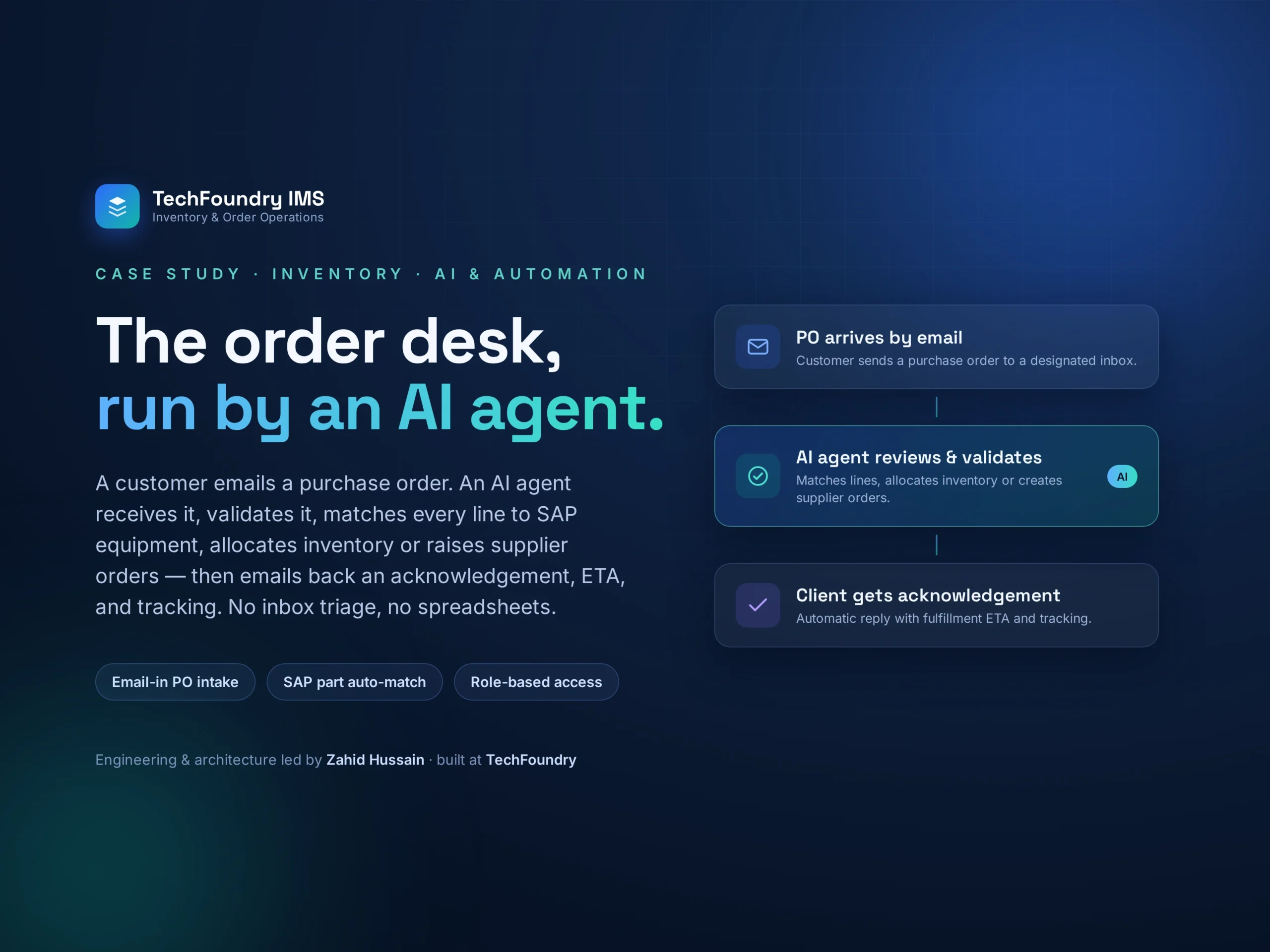
A purchase order is only the beginning.
Orders arrive by email as unstructured purchase orders full of raw part strings. Each line has to be validated, matched to SAP equipment, allocated from inventory or turned into a supplier order, shipped, tracked, and finally reconciled against vendor and courier invoices before anyone can see what the job actually earned.
Run by hand across inboxes and spreadsheets that process is slow and easy to get wrong. Lines get mismatched, conflicts surface late, stockouts creep up unnoticed and profitability stays invisible until an order closes. The Inventory Management System brings the whole purchasing and fulfillment lifecycle into one shared platform.
An agent at the front door.
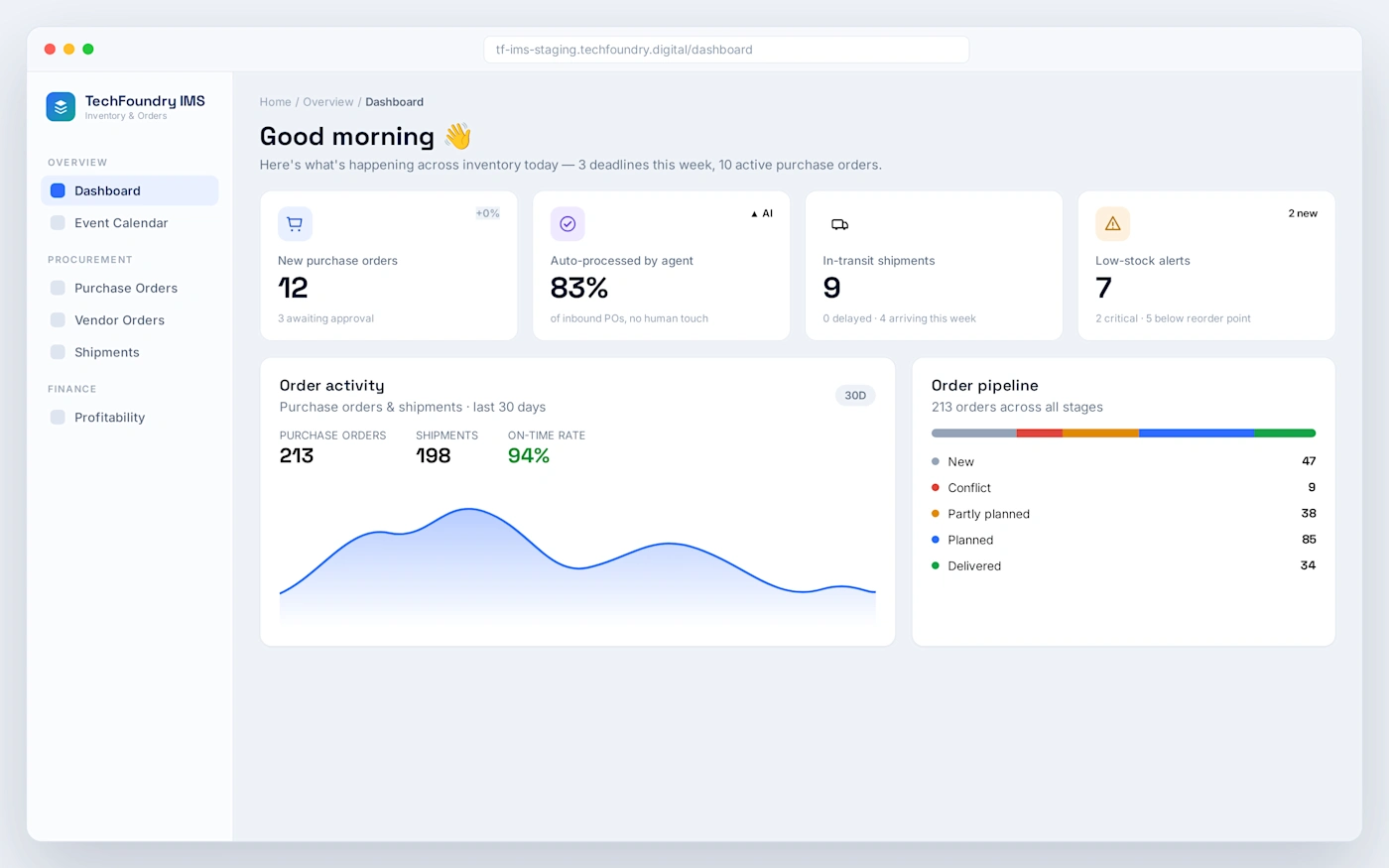
When a customer emails a purchase order, the intake agent reads it, validates the order and the account behind it, matches every line to SAP equipment, then either allocates available inventory or raises the supplier orders needed to fulfill it. It replies with an acknowledgement carrying a fulfillment estimate and tracking.
For routine orders that happens end to end with nobody in the loop. The team is left with the exceptions, which is where their judgement is actually worth something.
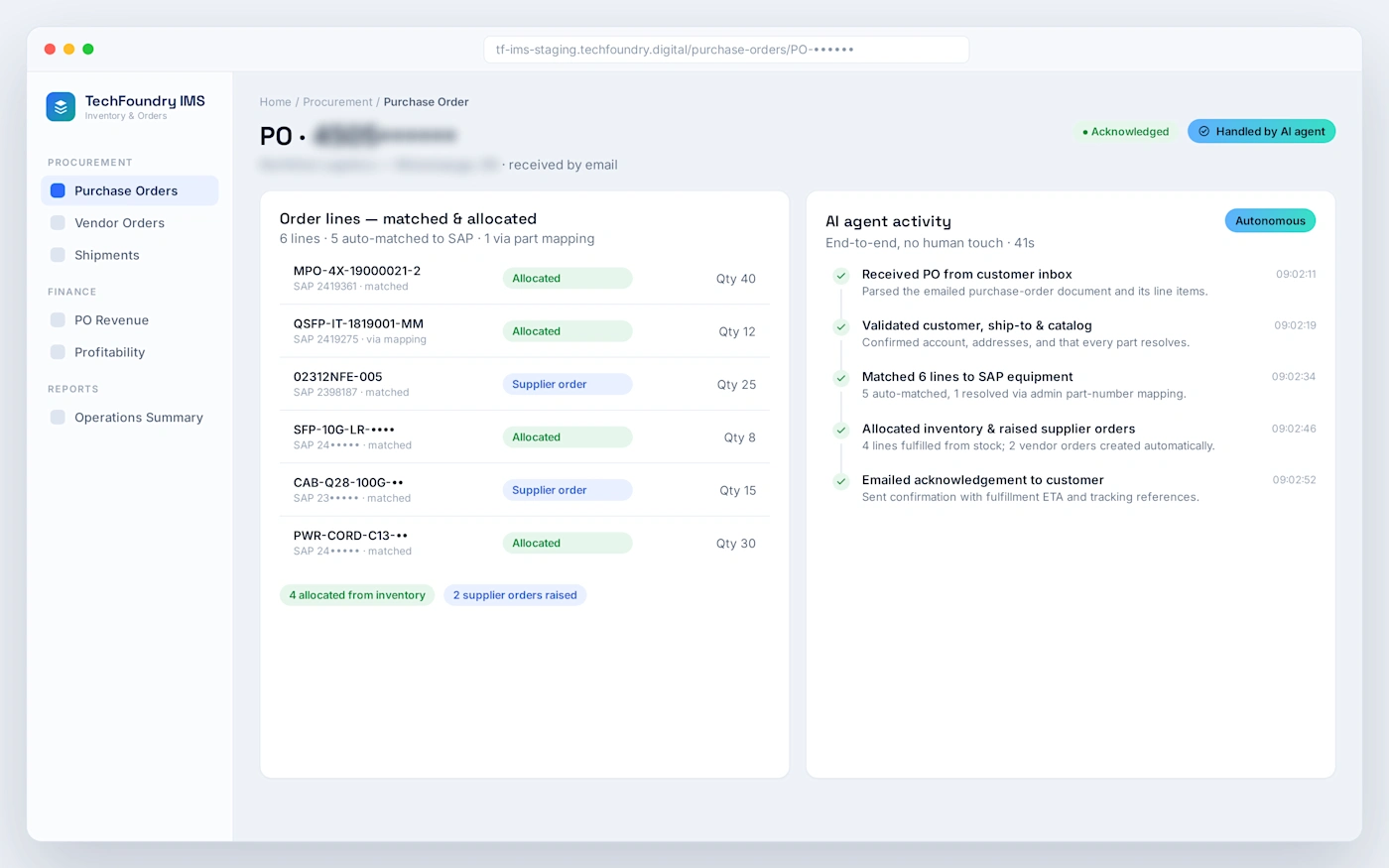
Matching, and what happens when it is unsure.
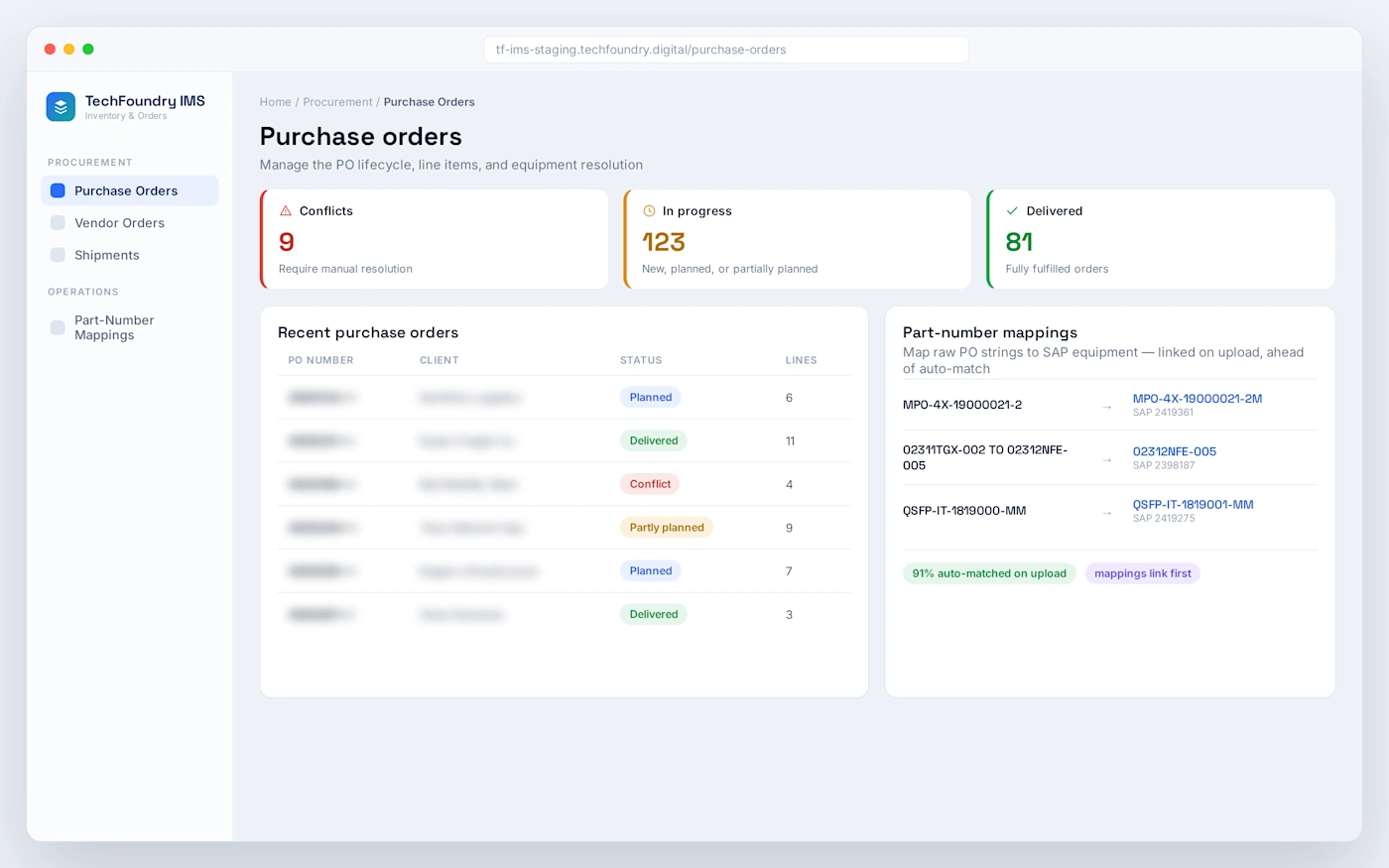
Underneath the agent sits a deterministic matching engine that resolves raw part strings to SAP equipment. Administrators manage explicit part number mappings that are applied ahead of the automatic match, so a known string always resolves the same way.
Anything ambiguous goes to a conflict queue rather than being guessed at. That distinction matters: an extracted order line is not the same thing as an approved operational decision.
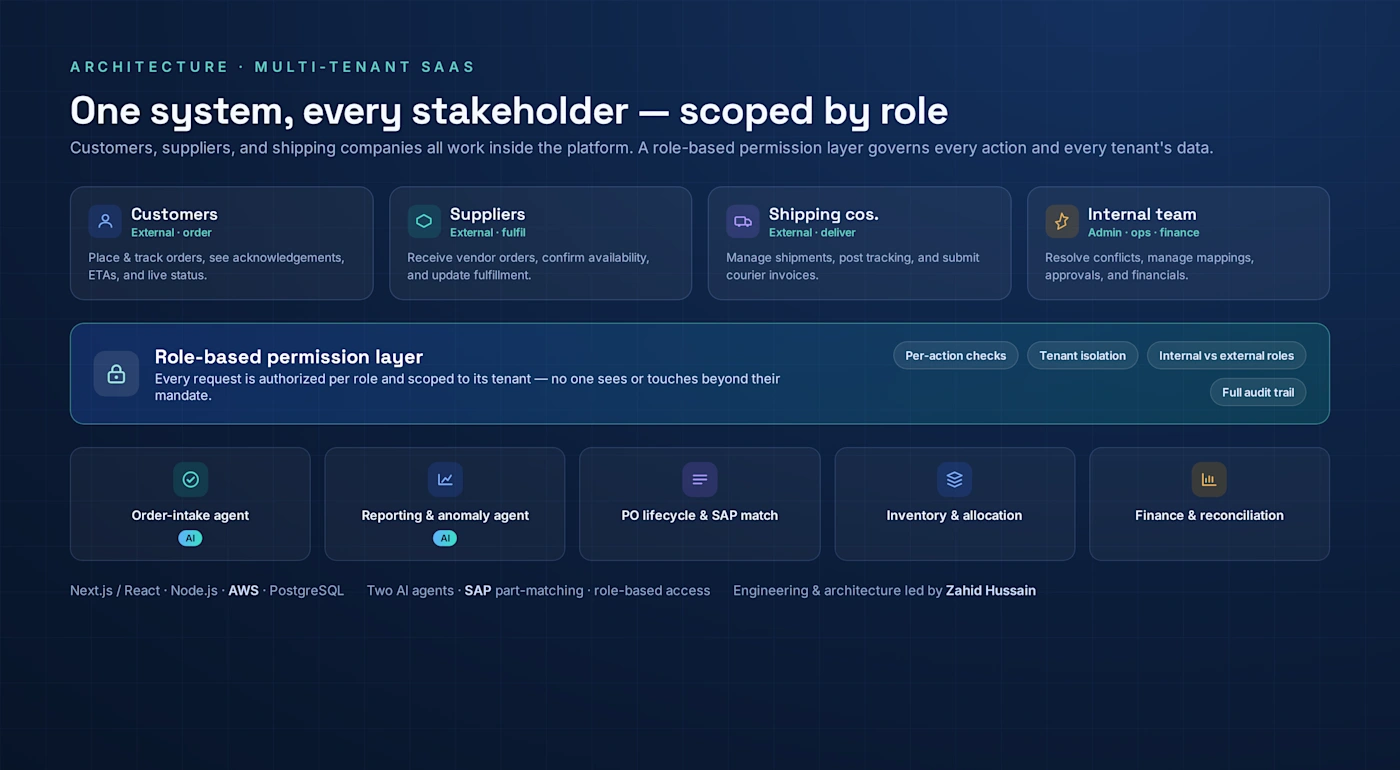
Everyone in one platform, nobody past their mandate.
Customers, suppliers, shipping companies and internal staff all work inside the same system. A granular role based permission layer authorises every action and scopes each tenant’s data, so no party sees or touches anything beyond what their role allows.
The full order lifecycle is visible in one place, moving from new through conflict or partly planned to planned and delivered.
Look beyond the order desk.
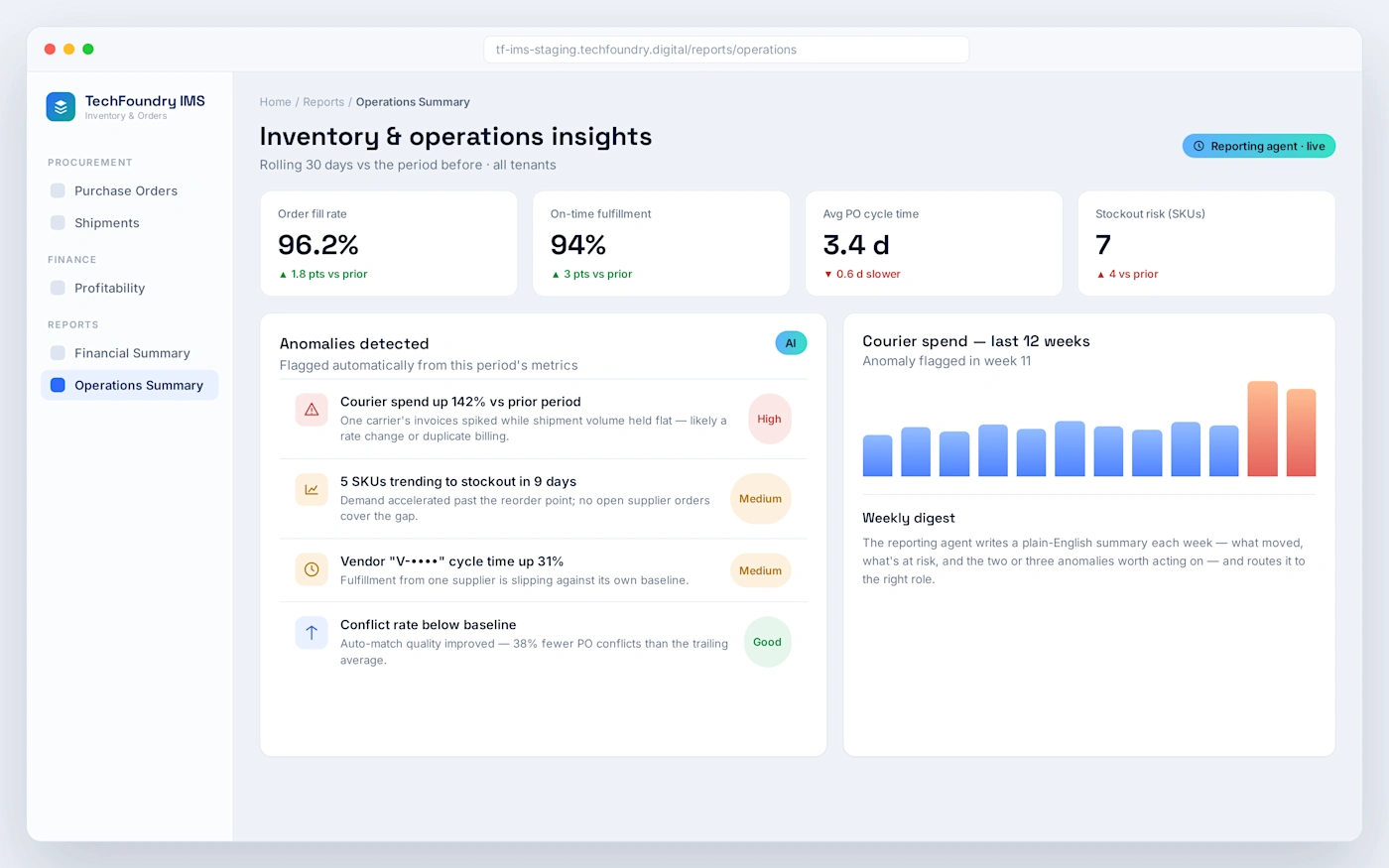
A second agent watches the numbers rather than the orders. It turns raw inventory and operations metrics into a plain English digest and flags anomalies on its own: a courier whose spend is spiking, stock trending toward a stockout, a vendor whose cycle time is slipping.
Each finding is routed to the role that can act on it, so it arrives as a prompt to do something rather than another dashboard to check.
Margin visible by order.
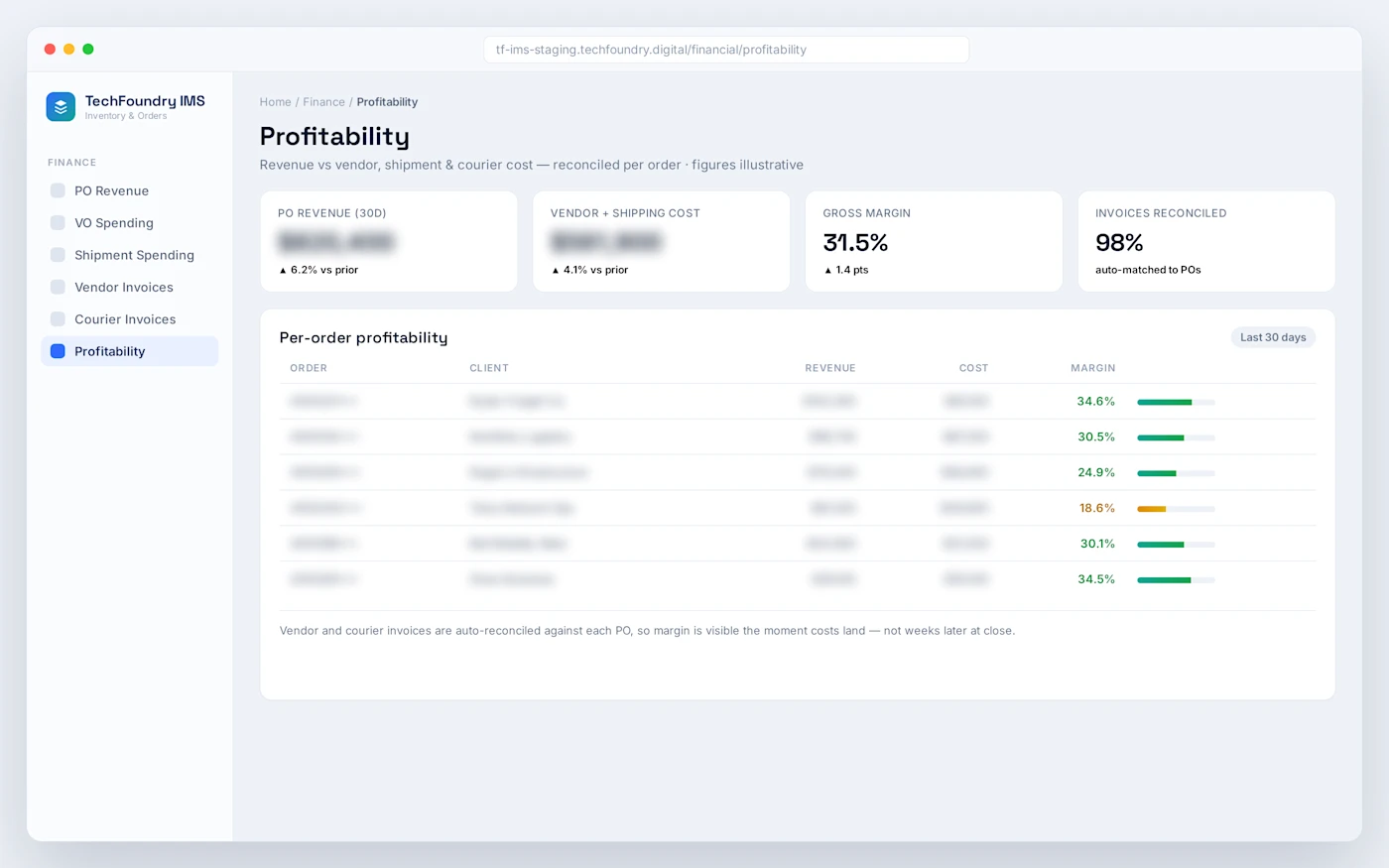
Vendor and courier invoices are reconciled automatically against the purchase order they belong to. Profitability becomes visible per order as soon as the invoices land, instead of surfacing once the job has already closed and the chance to act on it has gone.
How to engage with us
Good work starts
with a conversation.
Tell us what you want to build or improve, and we will come back with a practical next step rather than a sales sequence.
Teams we have worked with
Read client feedback ↗